7. Gaming Enthusiast: Metaverse Mia
-
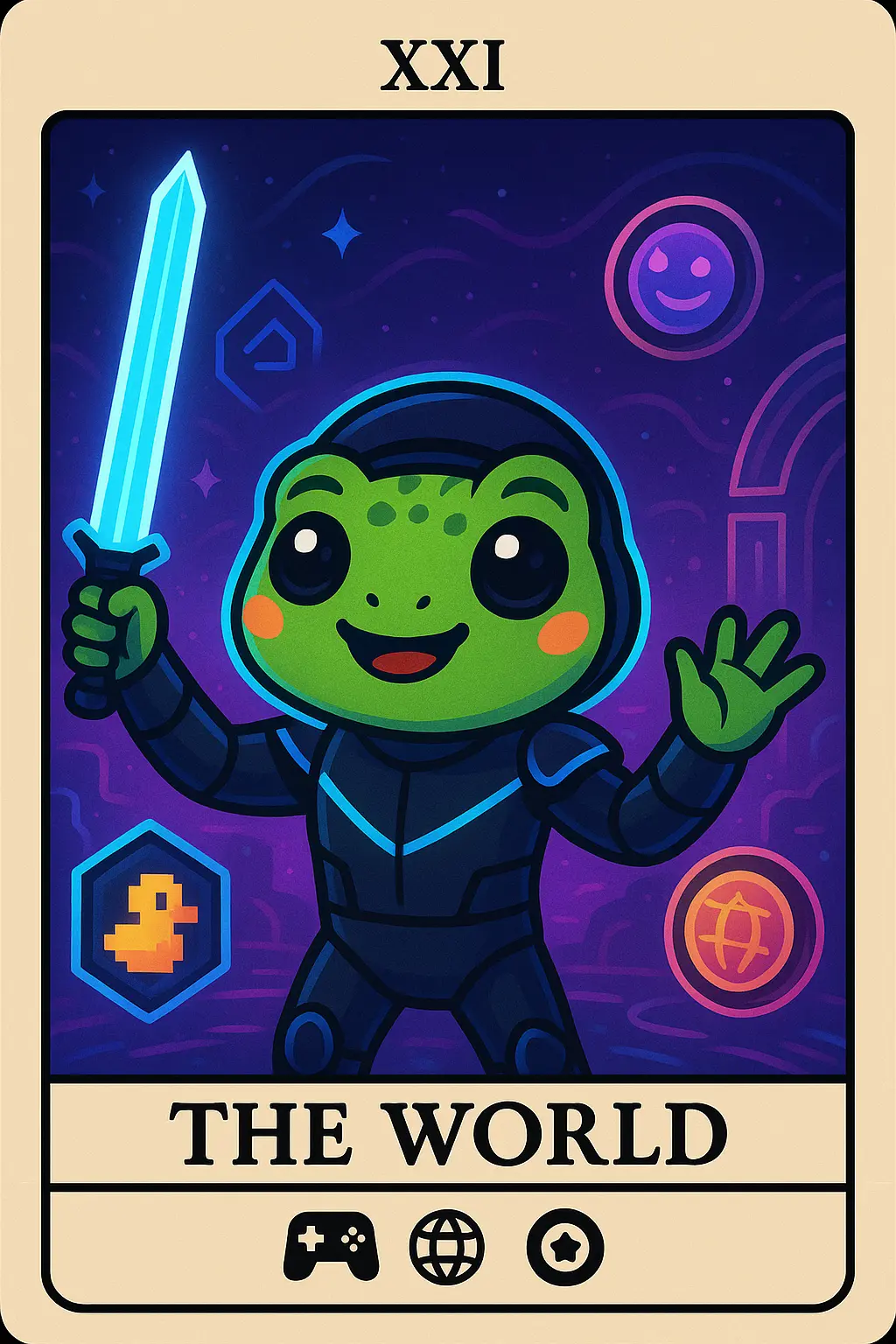
Dancing in virtual realms, achieving completion through play and digital exploration
-
tl;dr
The Gaming/Metaverse Enthusiast, the GameFi player, focuses on play-to-earn games, participates in NFT economy and virtual world.
- Leads Gaming Economics: Blends escapism with pragmatism, viewing games as economies amid volatility, heavily engaged in guilds and community coordination, seeks both fun and financial rewards
- Enjoys Empowerment and Ownership: Trades NFTs for sovereignty, controls assets, prioritizes ownership over temporary gains
- Prefers Security: Hangs on around audited games, stable infrastructure, good governance that maintains and secures player reputation
- Takes Risks Pragmatically: Balances fun with earning
- Customizes Avatars for Immersive Self-Expression: Views avatars as an extension of identity
- Sustainability Skeptic: Demands balanced tokenomics over hype
-
Characteristics
- Engages in daily gaming sessions
- Focuses on play-to-earn and GameFi
- Actively participates in virtual world and avatar culture
- Trades and collects in-game assets
- Takes part in Web3 community guilds
-
Behavior Patterns
- Enjoys gaming sessions daily with earning objective
- Coordinates guild strategy
- Trades gaming NFTs and tokens
- Participates in virtual events
-
Pain Points
- Game sustainability
- Token inflation
- ROI challenges, time investment as compared to returns
- Regulatory and security risks, hacks, exploits, token collapse, reputation damage
-
Engagement Hooks
- High time investment
- Social gaming focus
-
Primary Platforms
- Discord gaming servers
- Metaverse platforms (for example, Decentraland)
- NFT marketplaces
-
Tech Affinity
- Tokenomics design tools: Tools that help control token inflation, implement sinks/burns, dual-token systems
- Guild and scholarship management systems: Organize, manage and monitor shared assets and game rewards
- Analytics & player behavior tools: Tools that help track DAU, wallet activity, earnings
- Interoperable NFTs & marketplaces: Secure ownership and trading of gaming assets
- Metaverse & immersive tech: Avatars, VR/AR experiences
How to Target?
-
Gaming Enthusiast Mindset
- Gaming and investment mindset, games blend fun, asset acquisition and earnings
- Optimistic and risk aware
- Community and social orientation aware, guilds, virtual events encourage sustained involvement
- Desire ownership with meaning, Avatars, NFTs, tokens hold meaning to them and they care about owning such assets and having control over them via trading
- Like sustainability and longevity, prefer games that combine fun with utility
- Exploratory and novelty seeking mindset, open to virtual worlds, avatars, metaverse experiences; exploring new genres; trying hybrid models; being early adopters
-
Gaming Enthusiast Motivation
- Financial rewards and earning opportunities
- Ownership, meaning (utility) and scarcity
- Social status and reputation in online communities
- Ability to digitally explore beyond money, immersive experiences, fun-first games that also provide a means to earn, engage socially and acquire digital assets
-
Gaming Enthusiast Must-Have
- Transparent and sustainable (long-term viability) tokenomics
- Fair access and entry mechanisms that lowers barriers to entry to new gaming experiences with a potential to earn
- Engaging gameplay and fun experiences
- Analytics, feedback and transparency in gaming statistics, sharing, social signaling
- Interoperability, ability to trade tokens across games
- True ownership, privacy and secure asset management
- Trust and long term support for gaming assets
Action Plan
- Research & Refine: Do your own research. Use this template to guide your design, documentation and product feature decisions. The lack of formal UX research reports in Web3 is a testament that this is an underexplored area where original research could provide significant competitive advantage.
- Design Philosophy: Fun and immersive graphic experiences, avatar customization, responsive and low latency for gameplay, especially for mobile / browser play in emerging markets. Flexible monetization paths that enable players that just want to play, and also those that want to earn as well. Offering multiple modes (free-to-play + play-to-earn + hybrid). Guild dashboards and cross-platform interoperability.
- Communication Style: Engage using all community and guild channels. Leverage case stories highlighting players in similar geographies, contexts that are enjoying and gaining assets, build trust with transparency in tokenomics, publish reward breakdowns, inflation control, real player data, competitions, tournaments to engage exploratory and competitive mindset, consider regional economics and localization to reach target audience.
- Product Features: Robust tokenomics engine that provides sinks, burn mechanisms, dual tokens if needed, inflation control. Provide player leader boards and asset portfolio tracker, analytics, transparent game statistics, value of assets, risk metrics, social and community engagement and status display features, customizability, safety and governance transparency, audited smart contracts, clear game rules, cheating mitigation strategies. Interoperability and cross-interactions with metaverse and other gaming assets is a big plus. Local regulation, taxes, crypto access are important considerations for feature prioritization. Mechanisms to lock in loyalty sustains interest longer term. Game genre matters: RPGs, virtual world/social metaverse games appear to be preferred for deeper engagement & asset collecting. Action / casual P2E has audience but lower retention.